
Posted by Eric Scheidler (June 16, 2010 at 6:00 am)
Pro Life Action League
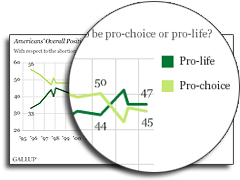 The most recent national poll
by the Gallup polling company finds, for the second year running, that
more Americans are calling themselves “pro-life” than “pro-choice.”
They’re even calling pro-life the “new normal.”
The most recent national poll
by the Gallup polling company finds, for the second year running, that
more Americans are calling themselves “pro-life” than “pro-choice.”
They’re even calling pro-life the “new normal.”As you might expect, pro-lifers have greeted these results with enthusiasm, while the pro-choice side has looked for ways to discount them.
On the Abortion Gang, a blog for “unapologetic activists for reproductive justice,” pro-choice blogger Reema criticizes pro-lifers—or “anti-choicers” as she calls them—for “going on and on” about the new poll numbers, despite the fact that many who call themselves pro-life are “exceptioneers,” who would not support an all-out ban on abortion.
In the post, entitled “A Question for Anti-Choicers,” she writes:
Exceptioneers make up the majority of the anti-choice movement, and I’m willing to bet that anti-choice leaders do not consider exceptioneers “pro-life” at all.
. . . so why are they flaunting around the Gallup polls? Why are they showing off the amount of Americans who are anti-choice, when they don’t even accept many of those anti-choice Americans into their cult?
An “Anti-Choice” Leader Responds
Reema ends her post by declaring, “I’d actually be interested in receiving an answer from anti-choicers (yes, the abortiongang does accept respectful comments from antis).”So I offered my own thoughts on this, which were—true to Reema’s promise—published in the comments under her post. Here’s what I wrote:
Reema—
Thanks for the opportunity to offer a response to your question from the “anti-choice” side.
I think JivinJ is right that both sides of the Gallup poll include a sizable segment that have mixed feelings on abortion.
But my guess, based on my years of experience in the movement, is that there is more of this among those who self-identify as “pro-choice.”
Just about the only people I’ve come across who call themselves “pro-life” while opposing all or most legal restrictions on abortion are politicians trying to curry favor with pro-life voters.
But almost everyone I’ve encountered who self-describes as “pro-choice” favors at least some kind of abortion restriction (ban on late term abortions, parental notice, life/health, etc.).
I think that’s to be expected. The label “pro-choice” was coined specifically to allow people to separate their “personal view” from their political or legal view on abortion. It’s a term designed to “give cover” to people who are uncomfortable (even deeply so) with abortion, but don’t want to see it banned outright.
The term “pro-life” is different. The pro-life movement has never used this (or any other term) to cover people who are “personally opposed” but don’t want abortion restricted or banned. “Pro-life” has always been used, by the movement, to describe opposition to abortion as both a personal moral view and a matter of public policy. And I think the general public has understood the term this way.
So one of the reasons these poll numbers are so encouraging for us is that they suggest our side is even stronger than the nearly 50/50 split would suggest. If it takes more of a commitment to one’s views on abortion—less of a tendency to divide one’s private view from one’s public policy position—to self-describe as “pro-life,” then we’ve less of that “mushy middle” on our side.
But even if I’m wrong about the commitment behind these two terms, the poll numbers are still encouraging because they suggest that the “exceptioneers” are tipping towards identifying themselves as pro-life. The pro-life “brand” is attracting people who might go either way, as to what label to wear.
If it’s possible for the exact same position (personally opposed to abortion, wouldn’t get one, wouldn’t advise anyone to, don’t think it should be totally unrestricted, but don’t want it banned either) to fall under “pro-choice” or “pro-life” depending on how one understands those terms, then it looks like more of those folks are aligning themselves with the pro-life side, for whatever reason.
As for the reason, that’s anyone’s guess. But there seems to be something about identifying oneself as pro-life that appeals to a growing segment of the population, even if that trend doesn’t represent any actual change in views.
And that’s good news for the pro-life side—and bad news for the pro-choice side.
Thanks again for the opportunity to weigh in on this.
Eric Scheidler
Executive Director
Pro-Life Action League


